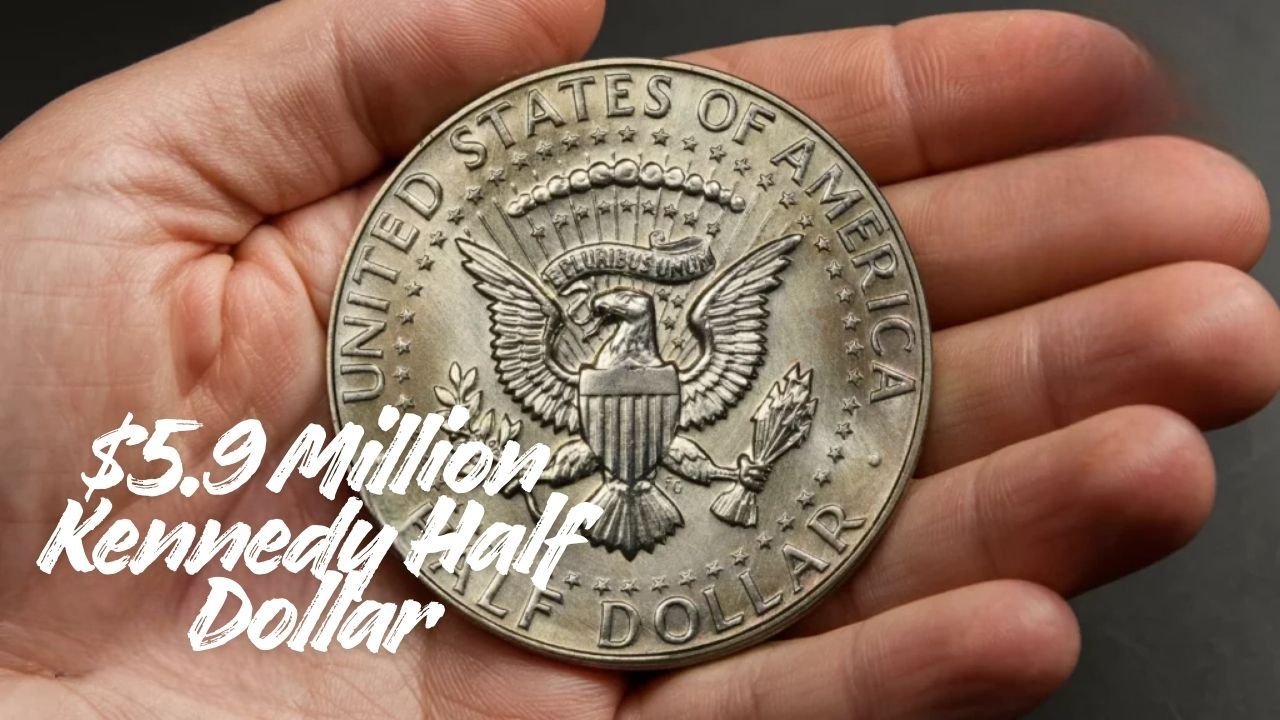
Few coins in modern American history carry the same emotional and historical weight as the Kennedy Half Dollar. Introduced in 1964 to honor President John F. Kennedy after his tragic assassination, the coin quickly became a symbol of national remembrance and unity. Millions of Americans saved these coins as keepsakes, and over time the series developed a strong following among collectors.
In recent years, headlines about an ultra-rare Kennedy Half Dollar valued near $5.9 million have captured widespread attention. While such valuations apply only to extraordinary specimens, the story highlights how rarity, condition, and historical context can dramatically influence a coin’s value.
For collectors and investors in 2026, understanding the Kennedy Half Dollar series can reveal surprising opportunities within this iconic coin.
The Origin of the Kennedy Half Dollar
The Kennedy Half Dollar was first issued in 1964, less than a year after President Kennedy’s assassination. Public demand for a commemorative coin honoring the late president was overwhelming, and the United States Mint moved quickly to produce the new design.
The coin’s obverse features a portrait of Kennedy designed by Gilroy Roberts, while the reverse displays a heraldic eagle created by Frank Gasparro. The design instantly became one of the most recognizable images in American coinage.

The first year of production used a composition of 90 percent silver and 10 percent copper. Because silver coins were already becoming scarce during the 1960s, the intrinsic metal value made the 1964 Kennedy Half Dollar especially attractive to collectors and the general public alike.
As a result, large numbers were removed from circulation almost immediately.
Changes in Composition Over Time
The composition of the Kennedy Half Dollar changed several times as the United States adjusted its coinage system.
1964: 90 Percent Silver
The inaugural year of the Kennedy Half Dollar remains one of the most sought-after by collectors. Coins produced in 1964 contain a full 90 percent silver composition, similar to earlier U.S. silver coinage.
High-quality examples from this year can command significant premiums depending on condition and rarity.
1965–1970: 40 Percent Silver
Beginning in 1965, rising silver prices led to a change in composition. Kennedy Half Dollars produced between 1965 and 1970 contain 40 percent silver rather than the earlier 90 percent alloy.
Although these coins contain less precious metal, they remain desirable due to their silver content and historical significance.
1971 and Beyond: Copper-Nickel Clad
From 1971 onward, Kennedy Half Dollars were struck using a copper-nickel clad composition similar to other circulating coins.
While these later coins generally carry lower intrinsic value, certain high-grade examples and mint errors have still become valuable collectibles.
Can a Kennedy Half Dollar Really Be Worth $5.9 Million?
Claims of a $5.9 million Kennedy Half Dollar usually refer to extremely rare coins that combine multiple extraordinary characteristics.
For a coin to approach this level of value, several factors must align.
Unique Mint Errors
One of the most important drivers of value is a dramatic minting error. Coins struck on the wrong metal planchet, double-struck coins, or unusual die pairings can become extremely rare collectibles.
Because modern minting technology maintains strict quality control, only a very small number of such errors escape into circulation.
Perfect or Near-Perfect Condition
Coins graded at the highest levels—often Mint State 68 or higher—are exceptionally rare. These coins show virtually no wear, maintain full original luster, and exhibit sharp details across the design.
Even small imperfections can significantly reduce value, making truly flawless coins highly desirable.
Historical Provenance
Another factor that can elevate a coin’s value is documented provenance. If a coin can be traced to a special mint event, experimental strike, or historically significant collection, collectors may place additional value on its story.
Professional Authentication
Any coin claimed to be worth millions must be authenticated and graded by a respected third-party grading service. Certification provides credibility in the marketplace and allows buyers to trust the coin’s authenticity and condition.
Without professional verification, even a rare coin may struggle to achieve top auction results.
Kennedy Half Dollars Collectors Value Most
While million-dollar examples are exceptionally rare, several varieties in the Kennedy Half Dollar series are genuinely valuable.
1964 Accented Hair Proof
One of the most famous design variations in the series is the 1964 Accented Hair Proof coin. This early proof version features stronger hair detail above Kennedy’s ear.
The design was later modified, making the accented variety scarcer. High-grade examples can command substantial premiums among collectors.
High-Grade 1964 Silver Coins
Uncirculated examples of the original 1964 silver issue are always in demand. Coins with exceptional surfaces and minimal contact marks can reach impressive auction prices.
Special Mint Set Coins
During the mid-1960s, the Mint produced special sets with unique finishes. Coins from these sets often display distinctive surface quality and can be more valuable than standard circulation strikes.
Error Coins
Error coins remain one of the most exciting areas of Kennedy Half Dollar collecting. Examples include off-center strikes, doubled dies, and coins struck on incorrect planchets.
Depending on the rarity and severity of the error, these coins can sell for hundreds or even thousands of dollars.
Why Condition Matters So Much
In numismatics, condition often determines whether a coin is worth a few dollars or several thousand.
Professional grading services use a standardized scale ranging from heavily worn coins to pristine Mint State examples that have never circulated.
A circulated Kennedy Half Dollar with visible wear may be worth only its silver melt value. In contrast, an uncirculated example with original surfaces and strong eye appeal can command significantly higher prices.
Collectors should always avoid cleaning coins, as improper cleaning can permanently damage the surface and reduce value.
Tips for Collectors and Investors
For those interested in building a Kennedy Half Dollar collection, a few strategies can help maximize success.
Begin by examining the coin’s date and mint mark. Early silver issues often provide the best long-term value.
Next, inspect the coin carefully for unusual features such as doubled lettering or off-center designs that might indicate an error.
Using a magnifying loupe can reveal small details that might otherwise go unnoticed.
If a coin appears particularly rare or well preserved, consider submitting it to a professional grading service. Certification not only protects the coin but also enhances its credibility in the collector market.
Finally, research recent auction results to understand realistic market values rather than relying solely on sensational headlines.
The Enduring Appeal of the Kennedy Half Dollar
More than six decades after its introduction, the Kennedy Half Dollar remains one of the most collected coins in the United States. Its historical significance, elegant design, and evolving composition make it an appealing series for both beginners and experienced collectors.
Whether valued for its silver content, historical connection, or rare varieties, the coin continues to attract attention in the numismatic world.
Final Thoughts
The idea of a $5.9 million Kennedy Half Dollar captures the imagination, but such valuations apply only to exceptionally rare and unique specimens. For most collectors, the true value of the series lies in its historical importance, precious metal content, and the excitement of discovering rare variations.
Even so, the Kennedy Half Dollar remains one of the most fascinating coins in modern numismatics. With careful study and a keen eye, collectors may uncover coins that carry both historical meaning and significant collector value.