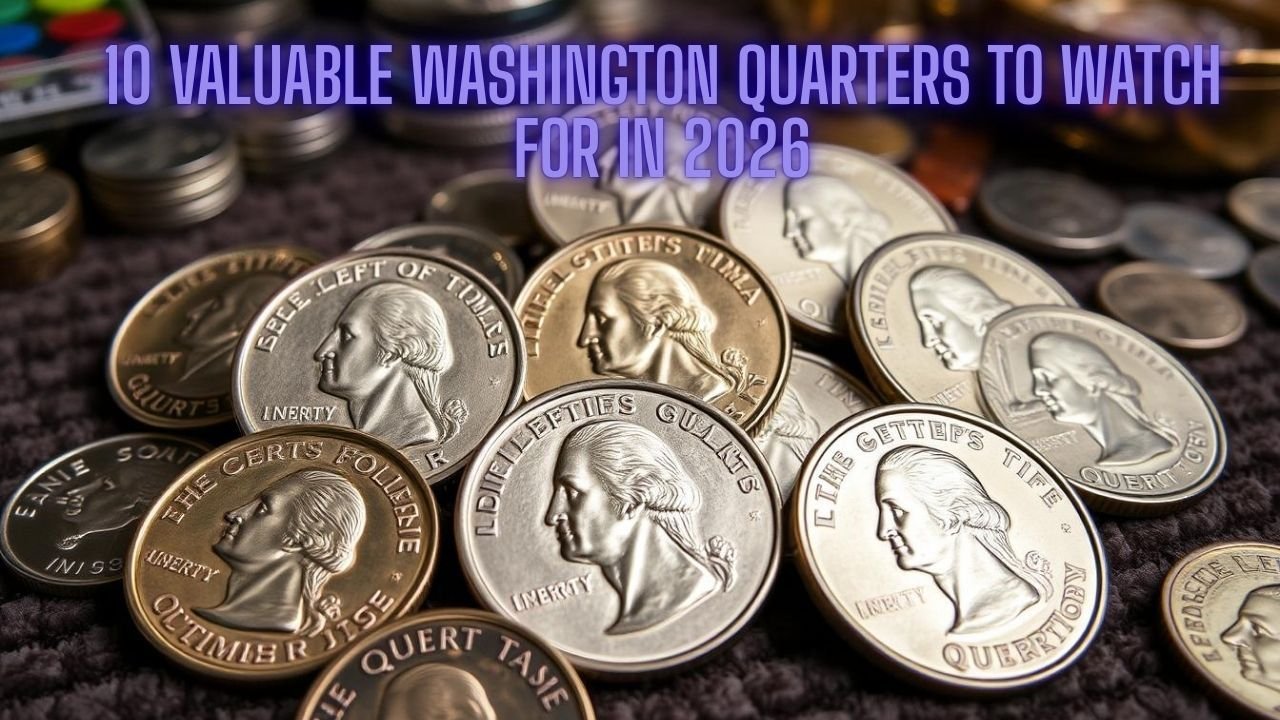
The Washington Quarter is one of the most iconic coins in American numismatic history. First introduced in 1932 to commemorate the 200th anniversary of George Washington’s birth, the coin quickly became a staple of U.S. currency and remains in circulation today.
While most Washington quarters are worth only their face value, certain dates, mint marks, and minting errors can make specific coins extremely valuable. For collectors and investors alike, identifying these rare varieties can turn an ordinary coin into a significant financial asset.
As the collector market continues to grow in 2026, several Washington quarters stand out for their rarity, historical significance, and strong auction performance. Understanding which coins to watch for can help both beginners and experienced collectors uncover hidden treasures in coin collections, estate holdings, or even everyday change.
The Historical Importance of Washington Quarters
The Washington Quarter replaced the Standing Liberty quarter design in 1932. Originally intended as a commemorative issue honoring President George Washington, the design proved so popular that it became a permanent part of U.S. coinage.
Early Washington quarters were composed of 90 percent silver, making them intrinsically valuable even when heavily circulated. However, beginning in 1965, the U.S. Mint transitioned to a copper-nickel clad composition due to rising silver prices.
Because of these changes and the long production history of the series, Washington quarters offer a wide range of collectible varieties including low-mintage coins, minting errors, and high-grade survivors.
1. 1932-D Washington Quarter
The 1932-D Washington Quarter is one of the most important key dates in the entire series. Produced at the Denver Mint during the first year of the coin’s release, this issue had a relatively low mintage compared with later years.
Even well-worn examples often sell for hundreds of dollars. Coins preserved in higher grades can command several thousand dollars or more at auction.
2. 1932-S Washington Quarter
Another cornerstone of the Washington Quarter series is the 1932-S issue from the San Francisco Mint. This coin is even scarcer than its Denver counterpart, making it highly desirable among collectors attempting to complete full sets.
High-quality examples with minimal wear are particularly valuable, with premium specimens reaching impressive auction results.
3. 1934 Doubled Die Obverse
The 1934 Doubled Die Obverse is a fascinating variety that features noticeable doubling on the front design. Collectors often focus on the words “IN GOD WE TRUST,” where the doubling can be clearly seen under magnification.
Because doubled die coins represent a genuine minting error rather than post-production damage, they attract significant interest from specialists.
4. 1937 Doubled Die Obverse
Another early doubled die variety appears on the 1937 Washington Quarter. The doubling is somewhat more subtle than the 1934 version but remains a recognized collectible variety.
Well-preserved examples certified by grading services are especially sought after by collectors focusing on error coins.
5. 1943-S Doubled Die Obverse
The 1943-S Washington Quarter combines two appealing factors for collectors: silver composition and a doubled die variety. Produced during World War II, this coin already carries historical significance due to its wartime context.
When doubling is present on the design elements, particularly in the lettering and date, the coin becomes significantly more desirable.
6. 1950-D/S Overmintmark
One of the more intriguing varieties in the Washington Quarter series is the 1950-D/S overmintmark. This error occurred when a Denver mint mark was punched over an existing San Francisco mint mark on the die.
The result is a distinctive layered mint mark that can be identified with magnification. Because these transitional mint errors were not produced intentionally, they remain scarce and collectible.
7. 1950-S/D Overmintmark
The opposite version of the previous error also exists: the 1950-S/D overmintmark. In this case, the San Francisco mint mark was stamped over a Denver mint mark.
This variety is generally considered rarer than the D/S version and can command higher prices when authenticated and well preserved.
8. 1964-D Doubled Die Reverse
The year 1964 marked the final production year of 90 percent silver Washington quarters. Among these coins, a notable doubled die reverse variety has attracted collector attention.
Doubling can be seen in certain reverse lettering and design elements. Because 1964 coins already contain silver, collectors often search through surviving examples in hopes of finding this valuable variety.
9. 1965 Silver Planchet Error
One of the most dramatic Washington Quarter errors occurred in 1965. That year marked the transition from silver coinage to copper-nickel clad composition.
However, a small number of coins were accidentally struck on leftover silver planchets from the previous year. These rare transitional errors are highly prized and can sell for thousands of dollars depending on their condition.
Collectors often identify these coins by their weight, appearance, and distinctive silver coloration.
10. High-Grade Proof Washington Quarters
While many collectors focus on circulation coins, high-grade proof Washington Quarters from the 1960s through the 1990s can also achieve strong values.
Proof coins were specially struck for collectors using polished dies and specially prepared blanks. When preserved in perfect or near-perfect condition, these coins display deep mirrored surfaces and strong contrast between frosted designs and reflective backgrounds.
Examples graded Proof 69 or Proof 70 by professional grading services are particularly desirable and can command substantial premiums in the collector market.
How to Identify Valuable Washington Quarters
For collectors searching through coin collections or everyday change, a few simple strategies can help identify valuable Washington quarters.
First, examine the date and mint mark carefully. Early coins from the 1930s often hold greater value, especially those from the Denver or San Francisco mints.
Second, use a magnifying glass or jeweler’s loupe to inspect details closely. Many valuable varieties, such as doubled dies or overmintmarks, are difficult to see without magnification.
Third, pay close attention to the coin’s overall condition. Coins with minimal wear, strong luster, and sharp design details tend to attract the highest prices.
Finally, consider professional certification if a coin appears rare or unusually well preserved. Grading services authenticate coins and assign standardized grades that help establish market value.
Why Washington Quarters Remain a Collector Favorite
The Washington Quarter series offers collectors a compelling combination of history, artistry, and investment potential. Spanning nearly a century of production, the series includes silver coins, transitional errors, and numerous rare varieties.
Because millions of Washington quarters were produced over the decades, the thrill of discovery remains very real. Rare coins continue to surface in old collections, estate sales, and even loose change.
For collectors in 2026, knowledge remains the most valuable tool. By understanding key dates, mint marks, and known error varieties, anyone can participate in the ongoing search for rare Washington quarters.
What appears to be an ordinary coin today could ultimately prove to be a hidden treasure worth far more than its face value.