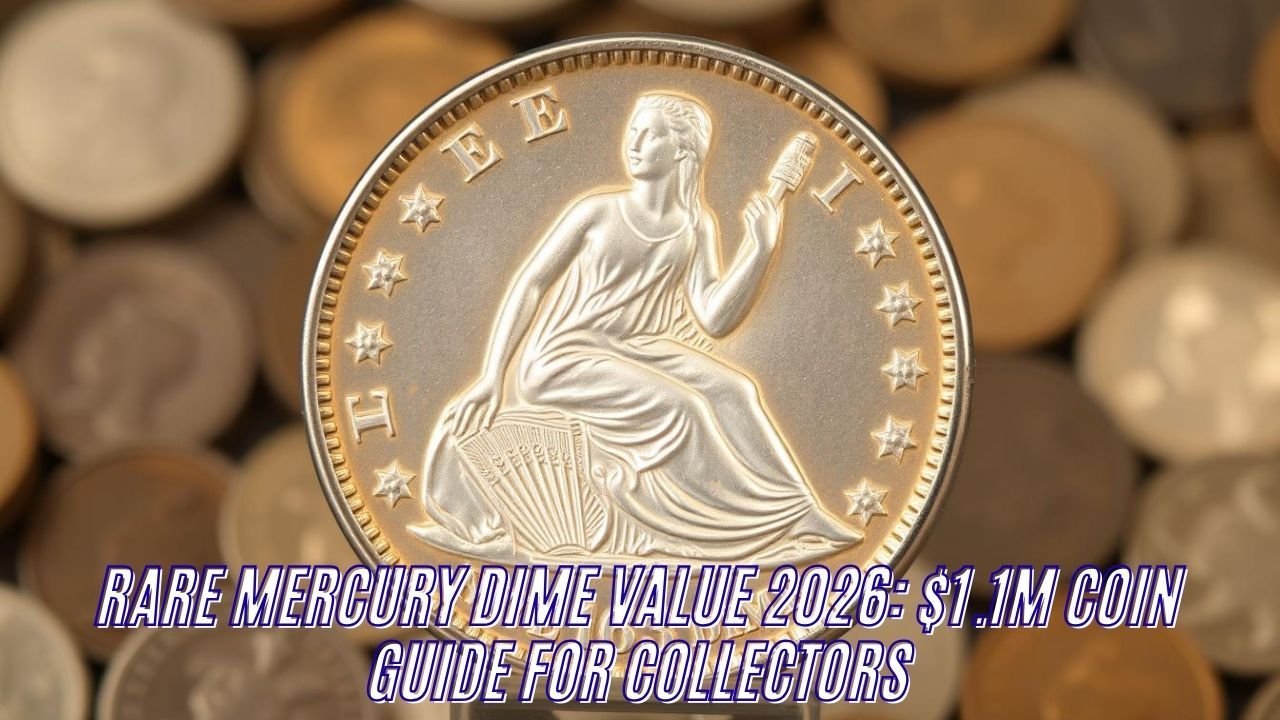
Among the most admired coins in American numismatics, the Mercury Dime—officially known as the Winged Liberty Head Dime—continues to captivate collectors and investors alike. Produced from 1916 through 1945, this elegant silver coin combines artistic beauty, historical significance, and the thrill of rare discoveries.
While most Mercury dimes trade primarily for their silver content or modest collector premiums, a select group of rare dates, exceptional condition pieces, and dramatic mint errors can command astonishing prices. In today’s collector market, top-tier examples have sold for hundreds of thousands of dollars, and the finest specimens can approach the extraordinary $1.1 million level.
For collectors in 2026, understanding what makes these coins valuable is essential for identifying hidden treasures.
The Story Behind the Mercury Dime
The Mercury Dime was designed by sculptor Adolph A. Weinman and introduced in 1916 as a replacement for the Barber dime. The coin features a portrait of Liberty wearing a winged cap, symbolizing freedom of thought.
Because the design resembles the Roman messenger god Mercury, collectors quickly began referring to it as the “Mercury Dime,” a nickname that remains widely used today.

On the reverse side, the coin displays a fasces—a bundle of rods tied with an axe—symbolizing unity and strength, accompanied by an olive branch representing peace.
All Mercury dimes were struck using 90 percent silver and 10 percent copper, giving every coin intrinsic metal value even before considering its collector appeal.
What Determines the Value of a Mercury Dime
Not every Mercury dime is rare. Millions were produced over nearly three decades of minting, meaning most examples remain relatively common.
However, certain factors dramatically increase the value of specific coins.
Low Mintage Years
Coins struck in smaller quantities naturally become more valuable over time. When fewer coins were produced in a given year or at a specific mint, collectors compete more aggressively to obtain them.
Condition and Professional Grading
Condition is one of the most important drivers of value. Coins preserved with minimal wear, sharp details, and strong luster often command prices many times higher than heavily circulated examples.
Professional grading services evaluate coins based on a standardized scale, helping collectors understand exactly how well a coin has survived.
Full Bands (FB) Designation
A unique characteristic collectors look for in Mercury dimes is the Full Bands designation. On the reverse side of the coin, horizontal bands appear across the fasces.
When these bands are fully separated and sharply defined, it indicates an exceptionally strong strike. Coins with this feature often sell for significantly higher prices.
Error and Variety Coins
Minting errors can transform otherwise ordinary coins into highly desirable collectibles. Overdates, doubled dies, and striking mistakes often attract intense collector interest.
The Most Valuable Mercury Dimes in 2026
Several Mercury dimes stand out as the most valuable and sought-after coins in the entire series.
1916-D Mercury Dime – The King of the Series
The 1916-D Mercury Dime remains the most famous key date of the entire series.
Produced at the Denver Mint during the coin’s first year of issue, only about 264,000 pieces were struck. This extremely low mintage makes it one of the rarest regular-issue dimes in American coinage.
Even worn examples can sell for thousands of dollars. High-grade specimens with strong details and Full Bands have reached remarkable auction prices, and elite examples have approached the million-dollar level.
For collectors building a complete Mercury dime set, the 1916-D is considered the ultimate centerpiece.
1942/1 Mercury Dime – The Legendary Overdate
One of the most fascinating varieties in the Mercury dime series is the famous 1942/1 overdate.
This error occurred when a die originally engraved with the 1941 date was reused and modified for the 1942 production year. As a result, the number “1” from the earlier date remains faintly visible beneath the “2.”
Both Philadelphia and Denver versions of this overdate exist, and they are among the most desirable Mercury dime varieties.
High-grade examples often sell for tens of thousands of dollars, and exceptional pieces can command even higher prices.
1931-S Mercury Dime with Full Bands
Although the 1931-S Mercury dime is not particularly rare in lower grades, coins displaying Full Bands are extremely scarce.
This combination of rarity and condition makes these examples highly desirable among advanced collectors.
Premium specimens with strong strikes and exceptional preservation have sold for tens of thousands of dollars, demonstrating how dramatically condition can affect value.
Other Important Key Dates
Several additional Mercury dimes are considered major dates in the series.
The 1921 and 1921-D issues were produced during a period of reduced coin demand following World War I, resulting in relatively low mintages.
The 1918-D is another coin frequently sought by collectors due to its scarcity in higher grades.
Well-preserved examples of these coins often command strong prices, especially when certified by professional grading services.
Valuable Error and Variety Mercury Dimes
Beyond standard mintages, error coins can also carry significant value.
Collectors pay close attention to unusual striking mistakes such as doubled dies, repunched mint marks, and dramatic overdates.
Coins struck off-center or with incomplete alignment can also attract strong interest depending on the severity of the error.
Another fascinating category includes coins struck on incorrect planchets. For example, a Mercury dime accidentally struck on a different metal blank can sell for a substantial premium at auction.
These unusual errors remind collectors that even small production mistakes at the mint can create extremely valuable collectibles.
The Importance of Professional Coin Grading
For valuable Mercury dimes, authentication and grading are essential steps in determining market value.
Organizations such as the Professional Coin Grading Service (PCGS) and the Numismatic Guaranty Company (NGC) examine coins carefully, assigning a grade based on wear, strike quality, and overall eye appeal.
Certified coins often sell for significantly higher prices because buyers trust the grading and authenticity.
For collectors who believe they may have discovered a rare Mercury dime, professional grading can unlock the coin’s true potential value.
Tips for Identifying Valuable Mercury Dimes
For collectors searching through old coins, a few simple strategies can help identify potentially valuable examples.
Start by examining the date and mint mark. These small details can dramatically influence a coin’s rarity.
Next, inspect the reverse side of the coin carefully. Sharp, clearly separated bands on the fasces may indicate a valuable Full Bands strike.
Avoid cleaning coins, even if they appear dirty. Cleaning can permanently damage the surface and significantly reduce value.
Finally, if a coin appears rare or unusually well preserved, consider professional evaluation to confirm its authenticity and grade.
Why Mercury Dimes Remain Highly Collectible
More than eighty years after the final Mercury dime was minted, the series continues to attract collectors around the world.
The coins combine beautiful design, historical significance, and the excitement of discovering rare varieties. Because many examples remain hidden in old collections and family heirlooms, the possibility of uncovering a valuable coin still exists today.
In 2026, Mercury dimes remain one of the most exciting areas of U.S. coin collecting. While most pieces trade for modest premiums above their silver value, the rarest dates, exceptional Full Bands strikes, and dramatic mint errors can achieve extraordinary prices.
For collectors willing to study the details and examine their coins closely, the next remarkable discovery could be just one dime away.