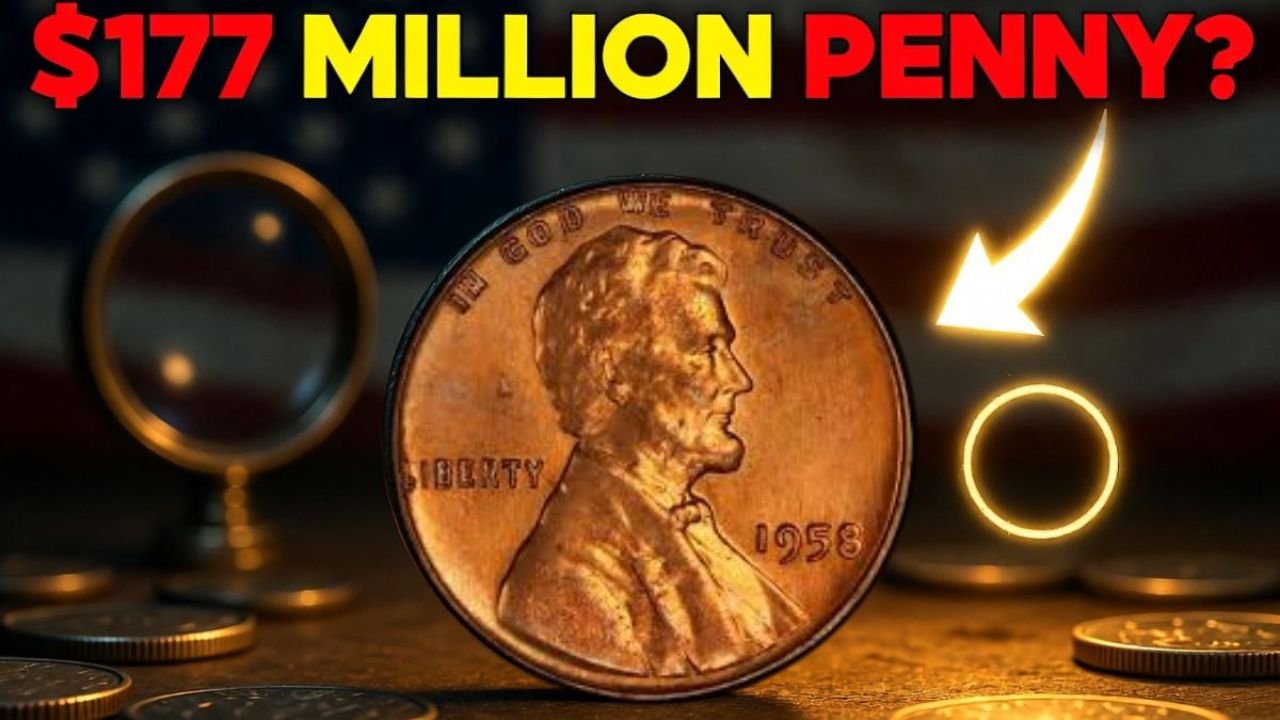
In the world of rare coins, few stories capture attention quite like the Lincoln Wheat Penny. This small copper coin, once used in everyday transactions across the United States, has become one of the most fascinating collectibles in modern numismatics. Over the years, rumors have circulated claiming that a single Lincoln Wheat Penny could be worth as much as $177 million.
The idea of a one-cent coin carrying such an extraordinary value sounds almost unbelievable. Yet stories like this continue to spark curiosity among collectors, investors, and everyday people searching through jars of old coins. While the $177 million figure remains unverified, the truth behind the Lincoln Wheat Penny is still remarkable. Some of these coins have sold for hundreds of thousands or even millions of dollars.
Understanding why these coins can be so valuable requires a closer look at their history, rarity, and the specific varieties collectors prize most.
The Birth of the Lincoln Wheat Penny
The Lincoln Wheat Penny was first introduced in 1909 to commemorate the 100th anniversary of President Abraham Lincoln’s birth. It marked a historic moment in U.S. coinage, as it was the first American circulating coin to feature the portrait of an actual person.
Designed by sculptor Victor David Brenner, the coin displays Lincoln’s profile on the obverse side. On the reverse, two wheat stalks frame the words “One Cent,” symbolizing agricultural prosperity and national growth.

Because of this design, collectors quickly began referring to the coin as the “Wheat Penny.” The series was produced from 1909 through 1958 before being replaced by the Lincoln Memorial design.
Although billions of Wheat Pennies were minted during those decades, certain dates, mint marks, and minting errors have made specific coins exceptionally rare.
The $177 Million Claim: Fact or Fiction?
The claim that a Lincoln Wheat Penny could be worth $177 million has circulated widely in online discussions and collector rumors. However, there is currently no confirmed public auction sale of a Wheat Penny at that level.
Even the most valuable U.S. coins ever sold have not reached that price.
That said, the reason such stories gain traction is because several Wheat Pennies have achieved extraordinary prices. In rare cases, coins with unique minting errors or extremely limited survival numbers have sold for millions of dollars.
The $177 million figure appears to be more of a speculative legend rather than a documented transaction. Still, it highlights the fascination collectors have with rare pennies and the possibility of discovering an extraordinary coin.
The Most Valuable Lincoln Wheat Pennies
While most Wheat Pennies are worth only a few cents or a few dollars, certain coins have become legendary within the collector community.
1943 Copper Wheat Penny
One of the most famous coins in American numismatics is the 1943 Copper Wheat Penny.
During World War II, copper was needed for military equipment, so the U.S. Mint switched to producing pennies using zinc-coated steel. However, a small number of copper planchets from the previous year were accidentally used to strike a handful of 1943 pennies.
These rare coins are among the most valuable pennies ever discovered. Verified examples have sold for well over $1 million at auction.
Because the vast majority of 1943 pennies were made from steel, finding one made from copper would be an extraordinary discovery.
1909-S VDB Wheat Penny
Another legendary rarity is the 1909-S VDB Wheat Penny.
The initials “VDB,” representing designer Victor David Brenner, appeared prominently on the reverse of the coin during its initial production. After public criticism, the U.S. Mint removed the initials, making the early version extremely limited.
Only about 484,000 coins were minted at the San Francisco Mint before the change occurred.
Because of this short production run, the 1909-S VDB remains one of the most sought-after pennies among collectors.
1914-D Wheat Penny
The 1914-D Wheat Penny is another key date that commands strong demand.
Produced at the Denver Mint with a relatively low mintage, this coin is difficult to find in higher grades. Well-preserved examples can sell for thousands of dollars, and exceptional specimens bring even higher prices.
For collectors building a complete Wheat Penny collection, this coin represents one of the most challenging pieces to acquire.
Could a Rare Wheat Penny Still Be in Circulation?
One of the most exciting aspects of coin collecting is the possibility of discovering something valuable in an unexpected place.
Lincoln Wheat Pennies remained in circulation for decades after they were minted. Many people spent them without realizing their potential collector value.
Because of this, some rare coins have been discovered in jars of loose change, estate collections, or forgotten coin boxes.
While the chances of finding an extremely rare penny worth millions are very small, history shows that valuable coins do occasionally appear in surprising places.
For collectors and hobbyists, this possibility keeps the search alive.
How to Check if Your Wheat Penny Is Valuable
If you come across a Lincoln Wheat Penny, there are a few key details to examine.
Start by checking the date on the coin. Certain years are far rarer than others.
Next, look for the mint mark located beneath the date. A small letter such as “D” for Denver or “S” for San Francisco can significantly influence the coin’s value.
Collectors also search for minting errors such as doubled lettering, unusual metal composition, or off-center strikes.
Finally, the coin’s condition plays an important role. Coins with sharp details and minimal wear tend to be far more valuable than heavily circulated examples.
If a coin appears unusual or particularly well preserved, professional grading can help determine its authenticity and market value.
Why Collectors Continue to Pursue Wheat Pennies
More than six decades after the series ended, Lincoln Wheat Pennies remain among the most popular collectible coins in the United States.
Their appeal lies in a combination of history, artistry, and the thrill of discovery. These coins represent a significant period in American history, spanning two world wars and decades of economic change.
For collectors, each coin carries a story that connects the past with the present.
Even though the $177 million valuation remains a rumor rather than a confirmed reality, the fascination surrounding the Lincoln Wheat Penny is very real.
Rare examples have already proven that a humble one-cent coin can hold extraordinary value. And for those who enjoy searching through old coins, the possibility of finding a hidden treasure remains one of the most exciting aspects of the hobby.