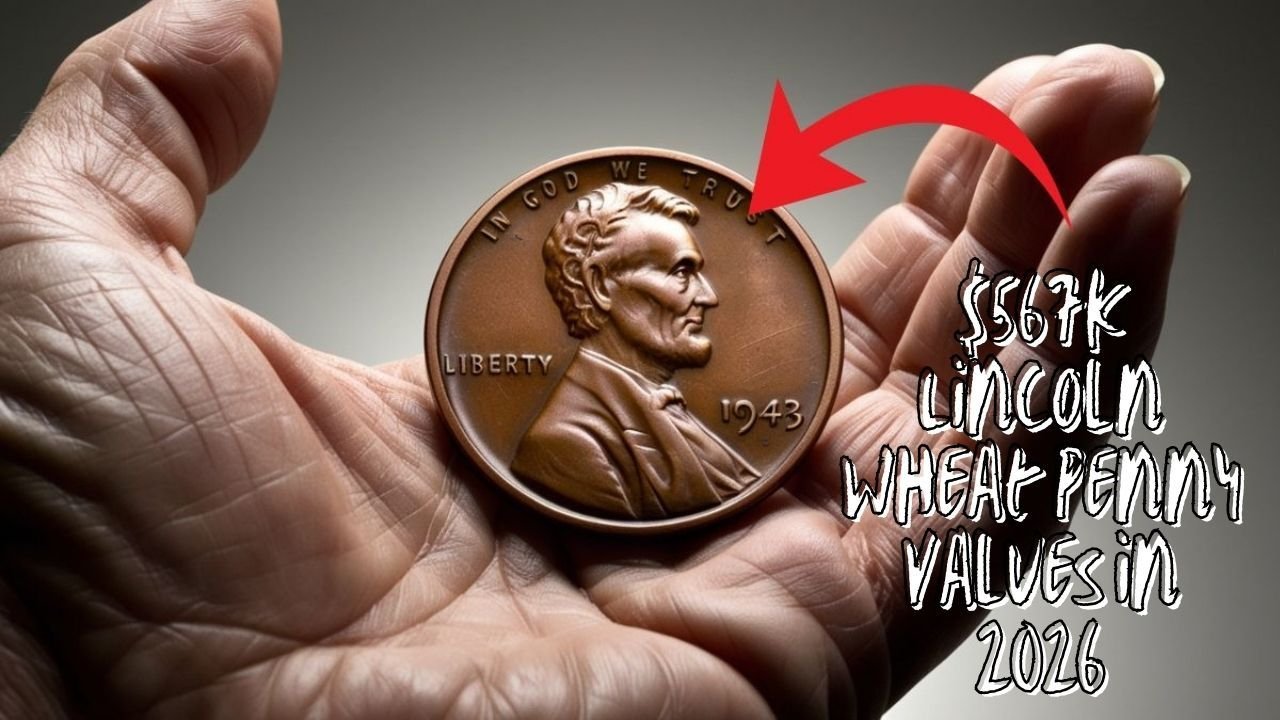
For many people, a penny is the most overlooked coin in everyday life. It sits in jars, pockets, and drawers, rarely given a second thought. Yet in the world of coin collecting, certain pennies have achieved astonishing value. Among the most fascinating are the Lincoln Wheat Pennies, minted from 1909 through 1958. While most examples remain worth only modest amounts, a handful of rare dates and minting errors have reached six-figure prices at auction.
In 2026, collector interest in these historic coins continues to grow. Some rare Lincoln Wheat Pennies have sold for hundreds of thousands of dollars, with certain exceptional specimens approaching the remarkable $567,000 range. Understanding which coins carry this potential can transform an ordinary penny into a significant collectible.
The Origins of the Lincoln Wheat Penny
The Lincoln Wheat Penny debuted in 1909 to commemorate the 100th anniversary of President Abraham Lincoln’s birth. It represented a groundbreaking change in American coinage, as it was the first circulating U.S. coin to feature the portrait of a real historical figure.
Designed by sculptor Victor David Brenner, the coin’s obverse displays Lincoln’s profile. The reverse features two wheat stalks framing the words “One Cent,” symbolizing prosperity and agricultural strength in early twentieth-century America.
This design remained in circulation for nearly five decades, making it one of the longest-running coin designs in U.S. history. Because so many were produced during this period, Wheat Pennies became a common part of everyday transactions for generations of Americans.
However, certain years, mint marks, and production errors have made a small number of these coins extremely valuable.
Record-Setting Lincoln Wheat Penny Values
Several Wheat Pennies have achieved remarkable auction results due to their rarity and historical context.
1943 Bronze Wheat Penny
The most famous error coin in the series is the 1943 Bronze Wheat Penny. During World War II, copper was needed for military equipment, so the U.S. Mint began producing pennies using zinc-coated steel.
However, a few leftover bronze planchets from 1942 were accidentally used to strike a small number of coins in 1943. These bronze versions are incredibly rare.
Collectors prize them because they represent a unique wartime minting error. Some verified examples have sold for more than $800,000, making them among the most valuable pennies ever discovered.
1958 Doubled Die Obverse
Another headline-grabbing rarity is the 1958 Doubled Die Obverse penny. This error occurred when the coin’s design was accidentally doubled during the die creation process.
The result is noticeable doubling on the date and lettering. Although very few examples exist, collectors consider them one of the most dramatic error coins in the Wheat Penny series.
High-grade specimens have sold for extraordinary prices, sometimes exceeding seven figures depending on rarity and preservation.
1909-S VDB Wheat Penny
The 1909-S VDB penny is one of the most famous coins in American numismatics.
During the first year of the Wheat Penny’s production, designer Victor David Brenner placed his initials “VDB” prominently on the reverse of the coin. After public criticism, the U.S. Mint quickly removed the initials, making the early version extremely limited.
Only about 484,000 coins were struck at the San Francisco Mint before the change occurred. Because of this short production run, the 1909-S VDB remains one of the most sought-after pennies in the collector market.
Notable Valuable Wheat Penny Varieties
Beyond the most famous rarities, several other Wheat Pennies are highly valued by collectors due to their unusual characteristics.
1943 Copper/Bronze Error
These coins are among the most famous minting errors in U.S. history. Unlike the standard steel pennies of that year, the bronze versions are heavier and non-magnetic. Only a small number are known to exist.
1955 Doubled Die Obverse
The 1955 Doubled Die penny is one of the most recognizable error coins ever produced. Strong doubling appears on the date and inscriptions, making the error visible even without magnification. Because of its dramatic appearance, it remains extremely popular among collectors.
1922 “No D” Penny
In 1922, pennies were produced only at the Denver Mint, meaning they were expected to display a “D” mint mark. However, excessive die polishing removed the mint mark on certain coins.
These rare “No D” pennies are now highly collectible, particularly in well-preserved condition.
1944 Steel Wheat Penny
Another unusual error occurred in 1944. By that year, the Mint had returned to copper pennies, but a small number of leftover steel planchets from 1943 were accidentally used.
These steel coins from 1944 are extremely rare and attract strong interest from collectors specializing in mint errors.
Why Condition Matters So Much
Two Wheat Pennies from the same year can differ dramatically in value depending on their condition.
Professional coin grading services evaluate coins using a standardized scale that ranges from heavily worn examples to pristine Mint State coins that have never circulated.
Copper coins are also graded by color categories such as Brown, Red-Brown, and Red. Coins with original bright red surfaces often command significantly higher prices because they show minimal oxidation or aging.
A rare date coin in perfect condition can sell for many times more than the same coin in worn condition.
Tips for Collectors and Coin Hunters
For those interested in searching for valuable Wheat Pennies, a few simple strategies can make a significant difference.
Start by checking the coin’s date and mint mark. Certain years and mint locations are known for producing valuable coins.
If you find a 1943 penny, use a magnet to test it. Steel pennies will stick to a magnet, while rare bronze versions will not.
Examine coins carefully for doubling, unusual metal color, or missing mint marks, as these can indicate rare error varieties.
Finally, if a coin appears rare or unusually well preserved, consider having it authenticated and graded by a professional coin grading service. Certified coins typically command higher prices because buyers trust their authenticity.
The Lasting Appeal of Lincoln Wheat Pennies
More than sixty years after their final production, Lincoln Wheat Pennies remain one of the most beloved series in American coin collecting. Their combination of historical significance, elegant design, and the thrill of discovering rare varieties continues to attract collectors around the world.
For many enthusiasts, the excitement lies in the possibility that a small coin found in an old jar or family collection could turn out to be something extraordinary.
Final Thoughts
The Lincoln Wheat Penny valued at up to $567,000 demonstrates how rarity, historical context, and minting errors can transform a humble coin into a remarkable asset. While most Wheat Pennies are worth only a small premium above their face value, the rarest examples have become legendary among collectors.
For those interested in numismatics, studying these coins offers both historical insight and the excitement of potential discovery. Whether you are an experienced collector or simply sorting through old coins at home, the next Wheat Penny you examine might hold far more value than you ever expected.