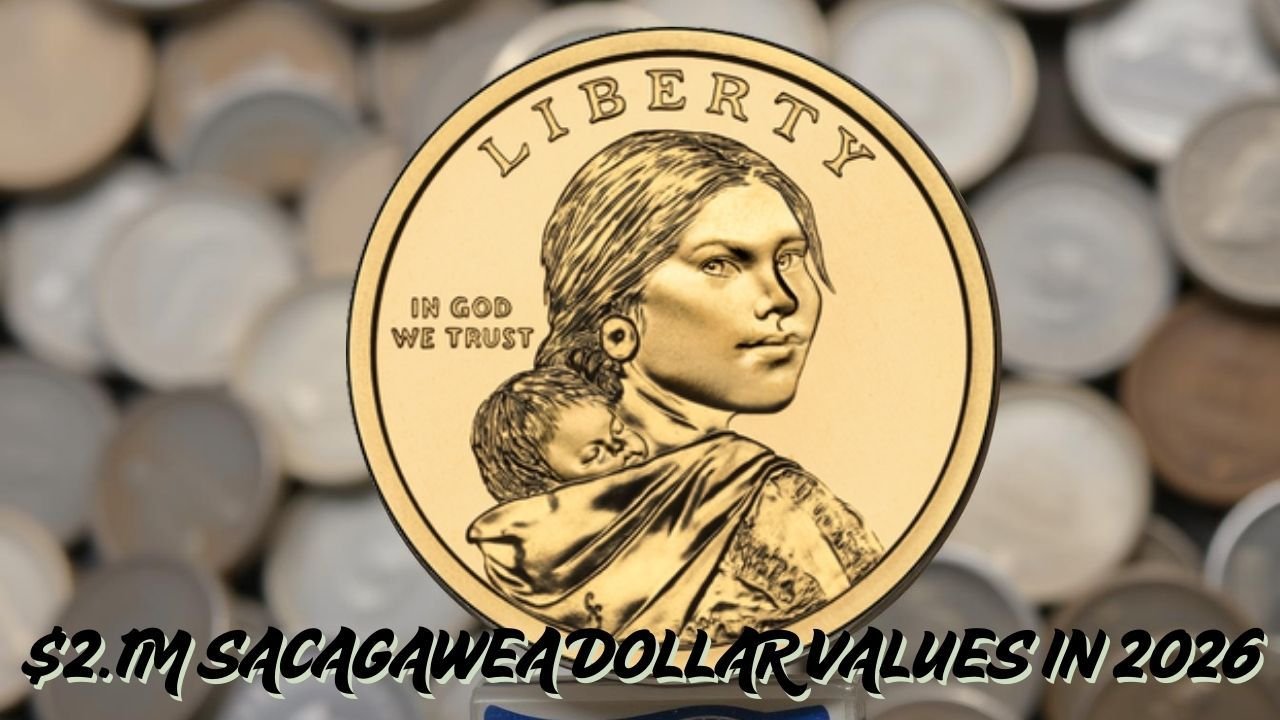
At first glance, the Sacagawea dollar appears to be just another modern U.S. coin. Introduced in 2000, the golden-colored dollar quickly became recognizable for its distinctive appearance and historical design. While millions of these coins were produced for everyday circulation, a small number of rare varieties and minting errors have captured the attention of collectors around the world.
In 2026, interest in these coins remains strong as a handful of exceptional Sacagawea dollars have reached astonishing valuations. Some rare specimens—particularly mule errors and unusual mint varieties—have been estimated near the remarkable $2.1 million range at high-profile auctions.
For collectors and investors alike, understanding the rare variations within this modern coin series can reveal surprising opportunities.
The Story Behind the Sacagawea Dollar
The Sacagawea dollar was introduced by the United States Mint in 2000 as part of an effort to reintroduce dollar coins into everyday circulation. The coin honors Sacagawea, the Shoshone woman who played a critical role as a guide and interpreter during the Lewis and Clark expedition in the early nineteenth century.
The obverse of the coin features a portrait of Sacagawea carrying her infant son, Jean Baptiste. This design was created by sculptor Glenna Goodacre and quickly became one of the most recognizable modern coin images.

The reverse design originally displayed a soaring eagle surrounded by seventeen stars, symbolizing the states that existed at the time of the Lewis and Clark expedition. Later years introduced different reverse designs as part of the Native American dollar series.
Although billions of Sacagawea dollars were minted, a handful of rare errors and special issues have become highly sought-after by collectors.
The $2.1 Million Sacagawea Mule Error
Among the most famous coins in the Sacagawea series is the legendary mule error discovered shortly after the coin’s release in 2000.
A mule error occurs when two coin dies that were never meant to be paired together are accidentally used in production. In this extraordinary case, the coin displays the Sacagawea dollar reverse paired with the obverse of a Washington quarter.
Because the quarter and dollar coins use different dies and designs, this pairing should never occur under normal minting procedures. The mistake likely happened during a brief lapse in quality control during the early production stages.
Experts believe that only a small number of these mule error coins were produced before the issue was discovered. Today, approximately 19 authenticated examples are known to exist.
Most of these coins have been graded in Mint State condition, with grades such as MS-66 and MS-67 indicating exceptional preservation.
Due to their rarity and historical significance, these mule errors have achieved remarkable prices at auction, with estimates approaching $2.1 million for top examples.
Space-Flown Sacagawea Dollars
Another fascinating chapter in the Sacagawea dollar story involves coins that traveled beyond Earth.
A limited number of special Sacagawea dollars were carried aboard space missions as commemorative pieces. These coins later received certification from grading services verifying their unique journey.
Because of their connection to space exploration and their extremely limited numbers, these “space-flown” coins have become prized collectibles.
Individual examples have achieved auction prices exceeding $550,000, reflecting the powerful combination of rarity, history, and provenance.
The Cheerios Promotional Dollars
One of the most interesting promotions in modern coin collecting occurred in early 2000 when a cereal brand partnered with the U.S. Mint to promote the new dollar coin.
Thousands of Sacagawea dollars were distributed in specially marked cereal boxes. While most of these coins were standard examples, a small number displayed a distinctive reverse design with enhanced eagle feather details.
These coins became known as “Cheerios dollars.” For many years collectors did not realize they were different from regular coins.
Once the design variation was identified, demand quickly increased. Certified examples of this promotional variety can sell for several thousand dollars depending on their condition and rarity.
Other Notable Sacagawea Error Coins
Beyond the famous mule error and promotional coins, several other unusual minting mistakes have appeared over the years.
Quarter-Dollar Mule Variants
Some coins have surfaced showing mismatched combinations of quarter and dollar dies. Although extremely rare, these hybrid coins demonstrate how small errors in the minting process can create unique collectibles.
Overstrikes and Design Transfers
In rare cases, coins have been struck over previously minted coins or planchets meant for different denominations. These unusual overstrikes can create fascinating hybrid designs.
While not all of these coins command million-dollar prices, they remain highly desirable among collectors specializing in mint errors.
Off-Center Strikes
Occasionally, coins are struck off-center, leaving part of the design missing. These dramatic errors can make a coin visually striking and collectible, particularly when the date remains visible.
How to Identify a Rare Sacagawea Dollar
For collectors hoping to discover a valuable Sacagawea dollar, careful inspection is essential.
Start by examining the coin’s color, size, and weight. Most Sacagawea dollars have a distinctive golden appearance due to their manganese-brass alloy.
If the coin appears silver-colored, unusually small, or significantly lighter than expected, it could indicate a wrong-planchet error.
Next, inspect both sides of the coin carefully. A mismatched obverse and reverse design could signal a mule error.
Using a magnifying glass or jeweler’s loupe can also reveal details such as doubled lettering, die cracks, or unusual surface features that may indicate a rare variety.
One important rule for collectors is never to clean a coin that might be valuable. Cleaning can leave microscopic scratches that dramatically reduce its value.
The Role of Professional Grading
If a coin appears rare or unusual, professional authentication is the most reliable way to confirm its value.
Third-party grading services examine the coin’s authenticity, evaluate its condition, and assign an official grade based on industry standards. The coin is then sealed in a protective holder that preserves it for long-term storage.
Certified coins often command significantly higher prices in the collector market because buyers trust the grading and authentication process.
Why Modern Coins Can Be Extremely Valuable
Many collectors assume that only ancient or century-old coins hold significant value. However, modern coins like the Sacagawea dollar prove that rarity can develop quickly when unusual minting errors occur.
Because quality control at modern mints is extremely strict, dramatic mistakes rarely escape into circulation. When they do, they instantly become numismatic curiosities with strong collector demand.
This combination of rarity, historical significance, and visual uniqueness can transform an ordinary modern coin into a remarkable collectible.
Final Thoughts
The Sacagawea dollar demonstrates how modern coins can achieve extraordinary value when rarity and minting errors intersect. From the legendary mule error estimated near $2.1 million to promotional coins and space-flown specimens, the series offers some of the most fascinating discoveries in contemporary numismatics.
While most Sacagawea dollars remain worth only their face value, the possibility of rare variations continues to inspire collectors to examine their coins closely.
For those who enjoy the thrill of discovery, even a modern dollar coin could hold a hidden story—and potentially a remarkable value waiting to be uncovered.