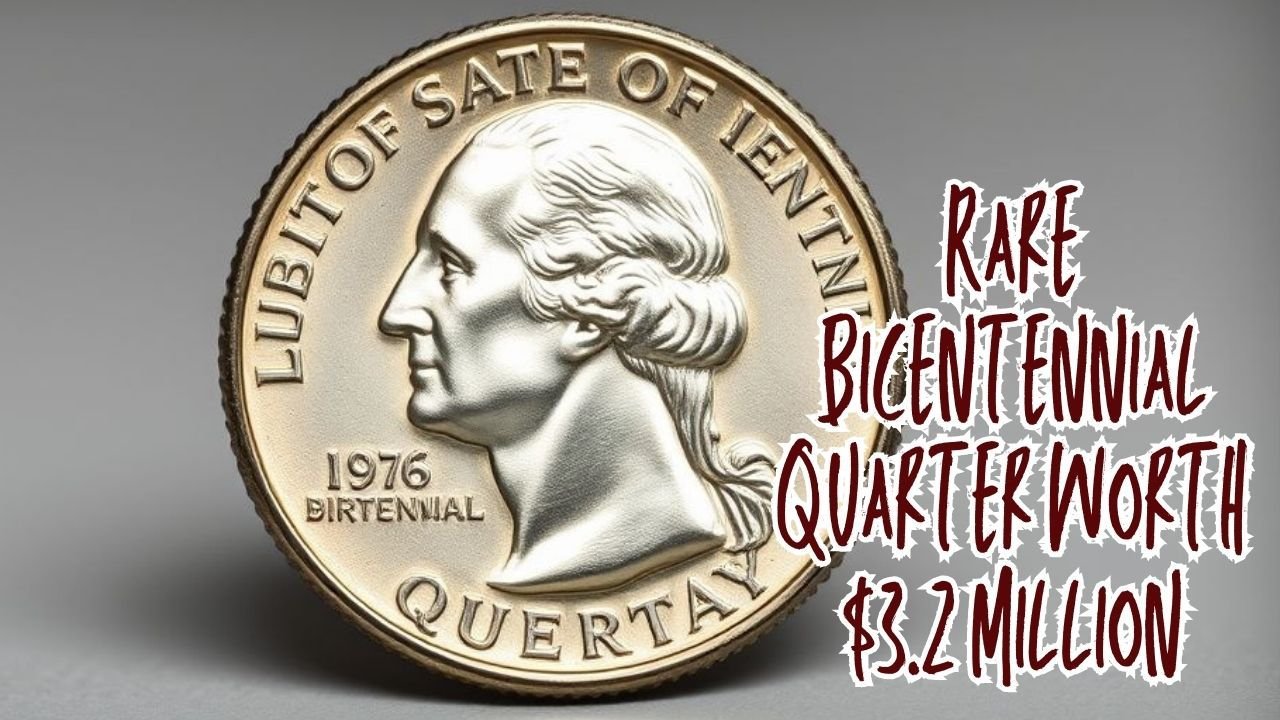
For most people, a quarter is simply everyday pocket change. Yet in the world of coin collecting, even a small coin can sometimes carry extraordinary value. One of the most fascinating examples is the Bicentennial Quarter, a coin created to celebrate the 200th anniversary of the United States. While the majority of these quarters remain worth only their face value, rare variations and minting anomalies have generated headlines with valuations reaching as high as $3.2 million.
Stories of multimillion-dollar coins capture the imagination of collectors and casual observers alike. They also highlight an important truth about numismatics: rarity, historical significance, and exceptional condition can transform an ordinary coin into a remarkable collectible.
For collectors in 2026, understanding the history and unique characteristics of the Bicentennial Quarter can help determine whether a coin might be more valuable than it first appears.
The History of the Bicentennial Quarter
The Bicentennial Quarter was issued in 1975 and 1976 to commemorate the 200th anniversary of American independence. To mark the occasion, the United States Mint introduced a special reverse design while keeping the familiar portrait of George Washington on the front.
Instead of the traditional eagle found on earlier quarters, the reverse features a colonial drummer accompanied by a victory torch encircled by thirteen stars. The coin also carries the distinctive dual date “1776–1976,” symbolizing the nation’s bicentennial celebration.

The design was selected through a national competition and quickly became one of the most recognizable commemorative coins in modern American history.
Although hundreds of millions of Bicentennial Quarters were produced, only a very small number possess the unusual characteristics that could make them highly valuable today.
Why Some Bicentennial Quarters Could Be Worth Millions
In coin collecting, value depends on several critical factors. A coin that reaches the multi-million-dollar range must combine extreme rarity, exceptional preservation, and strong collector demand.
For a Bicentennial Quarter to approach a value near $3.2 million, it would need to exhibit one or more extraordinary features.
Off-Metal Strikes
One possibility is a coin struck on the wrong type of metal. During the minting process, blank planchets are fed into coin presses. On rare occasions, a blank intended for a different coin can accidentally be used.
If a Bicentennial Quarter were struck on an experimental or precious-metal planchet—such as gold or another unusual alloy—it could become an extremely rare error coin.
Prototype or Experimental Coins
Another potential explanation for ultra-high values involves prototype coins created during testing phases. These experimental pieces are sometimes struck to evaluate designs or production methods before official minting begins.
If such a prototype escaped into private hands, its rarity could make it one of the most valuable examples in the series.
Dramatic Mint Errors
Major minting errors also attract strong interest from collectors. Double strikes, extreme off-center strikes, or unusual die pairings can create coins that are visually striking and historically significant.
Because quality control at modern mints is typically strict, dramatic errors rarely reach circulation. When they do, they quickly become prized collectibles.
Exceptional Condition
Condition plays a decisive role in determining value. Coins graded at the highest levels of preservation—often referred to as Mint State—display sharp details, original luster, and virtually no signs of wear.
A rare coin in perfect condition can be worth dramatically more than the same coin with minor circulation damage.
Silver vs. Standard Bicentennial Quarters
Most Bicentennial Quarters were struck using a copper-nickel clad composition similar to other circulating quarters of the era. These coins were produced in enormous quantities and remain common today.
However, the U.S. Mint also produced special collector versions made from 40 percent silver. These silver coins were included in commemorative proof and mint sets sold directly to collectors.
Although silver Bicentennial Quarters typically command higher prices than standard clad examples, they are not automatically worth extraordinary sums. Their value depends largely on condition and collector demand rather than rarity alone.
The multi-million-dollar valuations discussed in collector circles generally refer to unique errors or experimental coins rather than standard silver issues.
The Importance of Professional Grading
Whenever a coin is believed to be rare or valuable, professional authentication becomes essential. Independent grading organizations evaluate coins according to strict standards that measure wear, surface quality, and overall preservation.
Once a coin is authenticated and graded, it is sealed in a protective holder that confirms its legitimacy to collectors and investors.
Certified coins often sell for significantly higher prices at auction because buyers trust the grading process and the accuracy of the evaluation.
Without proper certification, even a potentially rare coin may struggle to achieve its full market value.
How to Check Your Bicentennial Quarter
If you come across a Bicentennial Quarter and want to determine whether it might be valuable, several simple checks can provide useful clues.
First, look for the coin’s mint mark. This small letter appears below Washington’s portrait and indicates where the coin was produced. Common marks include “D” for Denver and “S” for San Francisco, while some coins from Philadelphia carry no mark.
Next, examine the coin for unusual features such as doubled lettering, off-center designs, or missing elements. These characteristics can signal minting errors that may increase collector interest.
You can also inspect the edge of the coin. Standard clad quarters display a visible copper layer along the edge, while silver versions appear solid in color.
Using a magnifying glass or jeweler’s loupe can help reveal subtle details that might otherwise go unnoticed.
Finally, if a coin appears unusual or exceptionally well preserved, consider submitting it to a professional grading service for evaluation.
Why Bicentennial Quarters Remain Popular
Even though most Bicentennial Quarters are common, they continue to hold a special place in the hearts of collectors. Their design represents an important milestone in American history and reflects a moment of national celebration.
For many collectors, these coins also serve as an entry point into the hobby. Searching through everyday change for unusual coins can be both educational and exciting.
Stories about rare and valuable examples further fuel this interest by reminding people that extraordinary discoveries can sometimes emerge from the most ordinary places.
Final Thoughts
The legend of a Bicentennial Quarter valued at $3.2 million highlights the remarkable possibilities within the world of coin collecting. While the overwhelming majority of these coins remain worth only their face value, rare mint errors or experimental pieces could potentially command extraordinary prices.
For collectors and curious observers alike, examining coins closely can reveal fascinating details about history, craftsmanship, and rarity.
Even if a coin turns out to be ordinary, the process of discovering its story is part of what makes numismatics such an engaging and rewarding pursuit.