Among the countless coins that have circulated through American history, few capture the imagination of collectors quite like the Lincoln Wheat Penny. At first glance, it appears to be a simple one-cent coin—small, copper-colored, and once used in everyday purchases. Yet hidden within this seemingly ordinary currency are rare variations capable of commanding extraordinary prices.
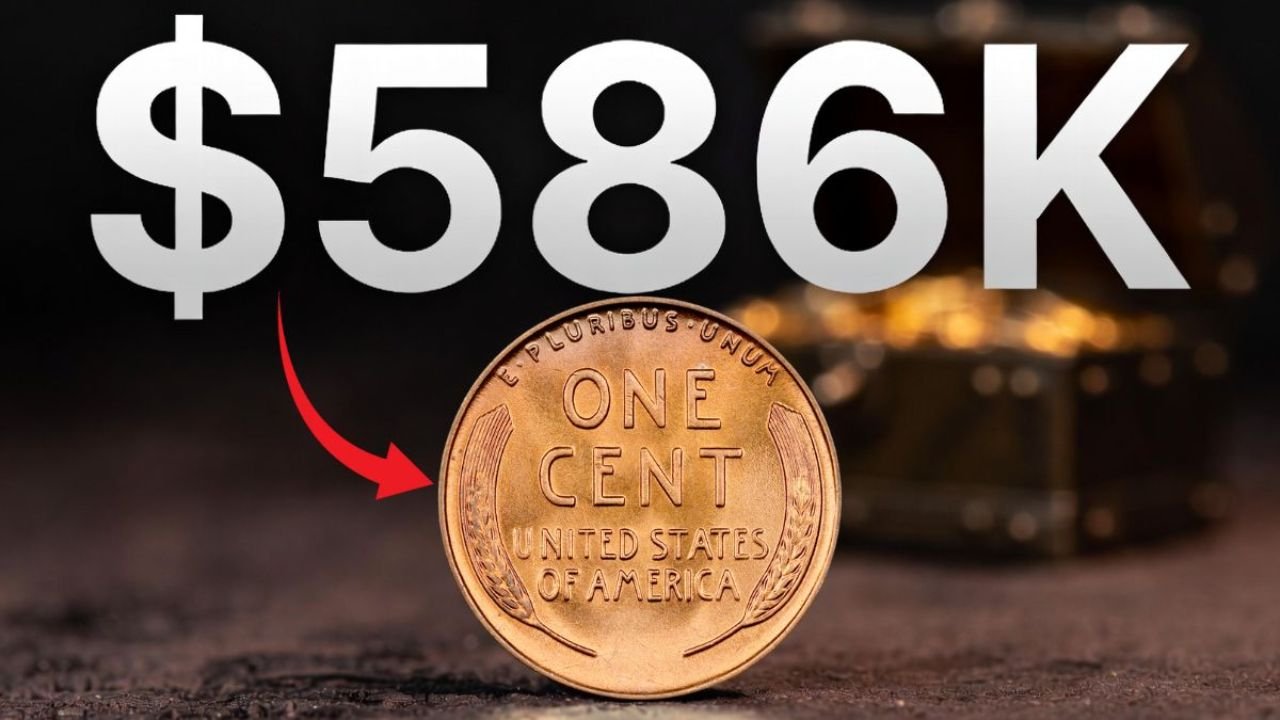
In recent years, the collector market has witnessed astonishing results when exceptional Wheat Pennies appear at auction. One notable example reached a remarkable valuation of $586,000, highlighting the powerful combination of rarity, historical significance, and minting errors that can transform a humble coin into a prized collectible.
For investors and coin enthusiasts in 2026, understanding which Lincoln Wheat Pennies hold real value is essential. With the right knowledge, even a small coin tucked away in an old collection could represent a remarkable discovery.
The Origins of the Lincoln Wheat Penny
The Lincoln Wheat Penny was first introduced in 1909 to celebrate the 100th anniversary of President Abraham Lincoln’s birth. Its creation marked a historic moment in American currency because it was the first circulating coin in the United States to feature the portrait of a real person.
Designed by sculptor Victor David Brenner, the coin displays Lincoln’s profile on the front, while the reverse side features two wheat stalks framing the words “One Cent.” The wheat design symbolized agricultural prosperity and economic growth during the early twentieth century.

This iconic coin remained in production until 1958, when the reverse design was replaced with the Lincoln Memorial.
Although billions of Wheat Pennies were minted during those decades, a small number of rare dates and error varieties have become some of the most sought-after coins in American numismatics.
Why Some Wheat Pennies Are Extremely Valuable
The difference between an ordinary penny and one worth thousands—or even hundreds of thousands—comes down to several critical factors.
Rarity and Mintage Numbers
Coins produced in small quantities naturally become more valuable over time. When fewer coins were minted during a particular year or at a specific mint location, collectors compete intensely to obtain them.
Minting Errors
Mistakes during the coin production process can create rare varieties that collectors actively pursue. These errors may include doubled lettering, missing mint marks, or coins struck on incorrect metal blanks.
Historical Context
Coins produced during unusual historical circumstances—such as wartime metal shortages—sometimes display unique variations that increase their rarity.
Condition and Preservation
The condition of a coin dramatically influences its value. Coins that remain in near-perfect condition with sharp details and original luster are far more desirable to collectors than heavily circulated pieces.
The Famous $586,000 Wheat Penny
One of the most fascinating examples in the Wheat Penny series is a rare coin that achieved a valuation of approximately $586,000. Coins that reach this level typically combine multiple desirable traits—extreme rarity, strong preservation, and a distinctive minting anomaly.
Such remarkable sales remind collectors that even a one-cent coin can hold extraordinary value when the right characteristics align.
While discoveries of coins at this price level are rare, they continue to inspire collectors to search through old collections, estate holdings, and forgotten coin jars.
Key Rare Lincoln Wheat Pennies to Know
Several specific Wheat Pennies consistently attract strong demand among collectors.
1909-S VDB Wheat Penny
The 1909-S VDB is one of the most famous coins in the entire series.
During the first year of production, designer Victor David Brenner’s initials—VDB—appeared prominently on the reverse of the coin. After public criticism, the U.S. Mint quickly removed the initials, making the original version extremely limited.
Only about 484,000 of these coins were struck at the San Francisco Mint, creating one of the most sought-after pennies in American coin collecting.
High-quality examples can sell for tens of thousands of dollars.
1914-D Wheat Penny
The 1914-D Wheat Penny is another key rarity due to its relatively low mintage.
Produced at the Denver Mint, this coin is difficult to find in well-preserved condition. Even moderately circulated examples can command strong premiums, while higher-grade specimens often reach impressive auction results.
1922 “Plain” Wheat Penny
One of the most intriguing Wheat Penny varieties is the 1922 “Plain” penny.
That year, pennies were produced only at the Denver Mint, meaning all coins were supposed to carry the “D” mint mark. However, excessive die polishing removed the mint mark on some coins, leaving them without any visible letter.
These rare coins are now highly collectible because they represent an unusual production error.
1943 Bronze Wheat Penny
During World War II, copper was needed for military supplies, so the U.S. Mint produced pennies using zinc-coated steel in 1943.
However, a few copper planchets from the previous year were accidentally used to strike a small number of 1943 pennies. These bronze versions are among the most famous and valuable error coins in U.S. history.
Some examples have sold for hundreds of thousands of dollars.
1944 Steel Wheat Penny
The opposite situation occurred in 1944 when copper pennies returned to production but a few leftover steel planchets were accidentally used.
These steel Wheat Pennies are extremely rare and highly prized by collectors because they represent a transitional error in the minting process.
1955 Doubled Die Wheat Penny
The 1955 Doubled Die penny is one of the most dramatic error coins in American currency.
Strong doubling appears on the obverse lettering and date, making the mistake visible even without magnification. Because of its striking appearance, this coin has become one of the most famous minting errors ever discovered.
How to Identify a Valuable Wheat Penny
For collectors hoping to uncover a rare Wheat Penny, a careful examination of several key details can help.
First, check the coin’s date. Certain years are known for producing rare varieties.
Next, look for the mint mark below the date. A small “D” for Denver or “S” for San Francisco can significantly affect the coin’s rarity.
Collectors should also inspect the coin for unusual characteristics such as doubled lettering, missing mint marks, or off-center strikes.
Finally, pay close attention to the coin’s overall condition. Strong details and minimal wear often indicate a higher grade and greater collector value.
If a coin appears rare or unusually well preserved, professional grading services can verify authenticity and determine its official grade.
The Excitement of Coin Collecting
One of the reasons the Lincoln Wheat Penny remains so popular is the thrill of discovery. Rare coins have been found in unexpected places—old jars of change, inherited collections, and forgotten coin albums.
For collectors, the excitement of examining each coin is part of the experience. A simple penny could turn out to be a remarkable piece of history.
Final Thoughts
The Lincoln Wheat Penny valued at $586,000 demonstrates how rarity, historical context, and minting errors can transform an ordinary coin into a remarkable treasure.
Although most Wheat Pennies are worth only modest amounts, the rarest examples continue to command extraordinary attention in the collector market. Their enduring popularity reflects both their historical significance and the excitement they bring to collectors around the world.
For anyone with old coins tucked away in drawers or collections, taking a closer look might reveal more than just spare change—it could uncover a small piece of history with remarkable value.