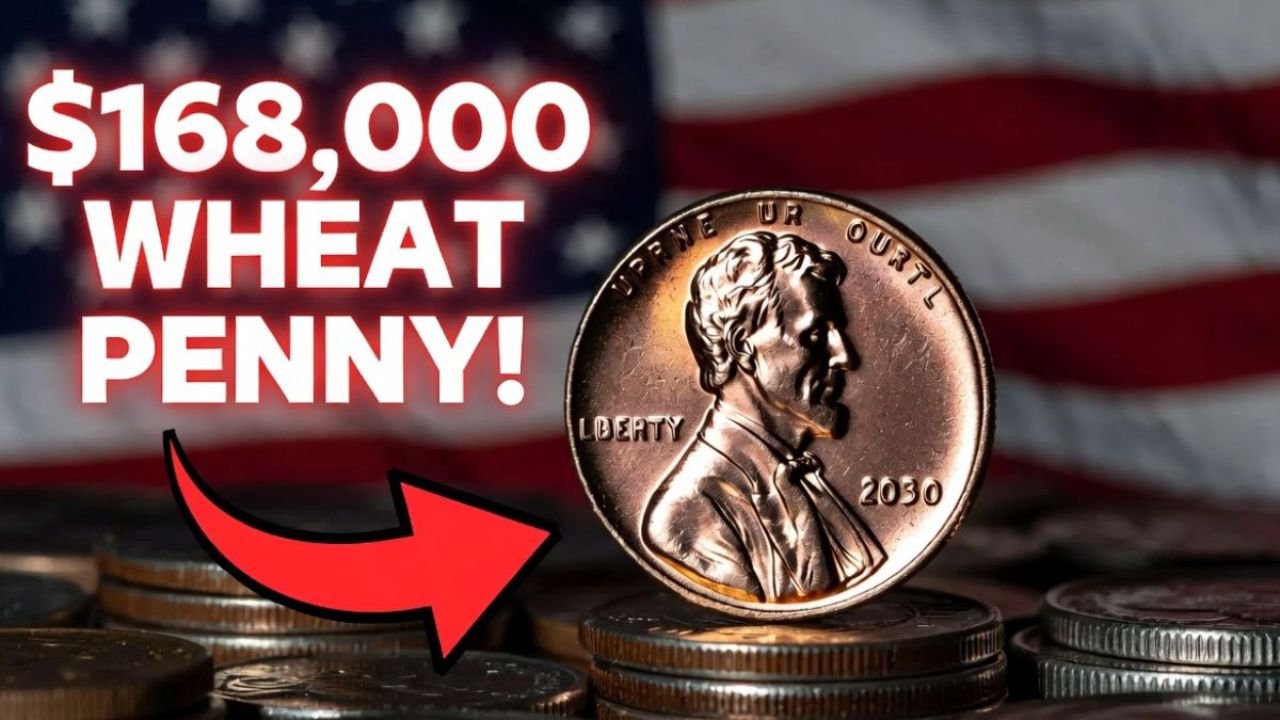
For most people, pennies are the least exciting coins in their pocket. They accumulate in jars, disappear between couch cushions, or end up forgotten in drawers. Yet within the world of numismatics—the study and collection of coins—certain pennies have achieved astonishing value. Among the most famous examples is the Lincoln Wheat Penny, a small copper coin that has captured the imagination of collectors for more than a century.
While millions of these coins were produced and circulated throughout the United States, a handful of rare varieties have reached remarkable auction prices. In some cases, exceptional examples have been valued as high as $168,000. Even more intriguing is the possibility that a few of these historic coins may still be found in everyday circulation today.
For collectors and curious observers alike, the story of the Lincoln Wheat Penny offers a fascinating glimpse into how ordinary currency can become a prized collectible.
The Birth of the Lincoln Wheat Penny
The Lincoln Wheat Penny was first introduced in 1909 to commemorate the 100th anniversary of President Abraham Lincoln’s birth. This coin represented a significant shift in American coin design.
Before 1909, United States coins typically featured allegorical figures such as Lady Liberty rather than portraits of real historical figures. The Lincoln cent broke this tradition by placing the image of an actual person—President Lincoln—on the obverse.
The design was created by sculptor Victor David Brenner, whose initials “VDB” appeared on early versions of the coin.
On the front of the coin, Lincoln’s profile faces to the right. The reverse side features two wheat stalks framing the inscriptions “ONE CENT” and “UNITED STATES OF AMERICA.” These wheat stalks gave the coin its popular nickname: the Wheat Penny.
The design remained in use until 1958, when it was replaced by the Lincoln Memorial reverse.
Why Certain Wheat Pennies Are So Valuable
Although billions of Wheat Pennies were minted during their nearly fifty-year production run, only a small number have achieved extraordinary value.
Several key factors determine why certain coins become highly valuable.
Limited Production
Some coins were minted in smaller quantities than others. Low mintage numbers mean fewer coins survived over time, increasing their rarity.
Minting Errors
Mistakes made during the minting process can create unique coins that attract strong collector demand. Errors such as doubled dies, missing mint marks, or incorrect metal compositions can dramatically increase value.
Historical Circumstances
Certain coins were produced during periods of unusual historical events, such as wartime metal shortages. These conditions sometimes led to rare variations that collectors actively seek.
Condition and Preservation
Perhaps the most important factor influencing value is the coin’s condition. Coins that retain sharp details, original luster, and minimal wear are significantly more valuable than heavily circulated examples.
The Famous $168,000 Wheat Penny
Among the most valuable Lincoln Wheat Pennies are rare varieties that have sold for prices approaching $168,000 at auction. These coins typically combine multiple desirable characteristics—rarity, historical significance, and exceptional preservation.
Two of the most famous examples illustrate why collectors are willing to pay such remarkable prices.
1943 Bronze Wheat Penny
During World War II, copper was urgently needed for military equipment and ammunition. To conserve this critical metal, the United States Mint switched penny production to zinc-coated steel in 1943.
However, a small number of bronze planchets from the previous year were accidentally left in the coin presses. As a result, a few 1943 pennies were struck in bronze instead of steel.
These coins are incredibly rare, and collectors consider them among the most famous minting errors in American coinage. Authentic examples have sold for hundreds of thousands of dollars.
1909-S VDB Wheat Penny
Another highly sought-after coin is the 1909-S VDB penny.
When the Lincoln cent was first introduced, designer Victor David Brenner placed his initials “VDB” prominently on the reverse of the coin. Some critics argued that the initials were too large, and the U.S. Mint quickly removed them from the design.
Because only a limited number of coins were produced at the San Francisco Mint before the change occurred, the 1909-S VDB penny became one of the most famous rarities in the entire series.
High-quality examples can command impressive prices in the collector market.
Can Wheat Pennies Still Be Found in Circulation?
One of the most exciting aspects of Wheat Penny collecting is the possibility—however small—of discovering one in everyday change.
Although production ended in 1958, these coins did not immediately disappear from circulation. Many continued to be used in everyday transactions for decades.
Even today, Wheat Pennies occasionally appear in coin rolls from banks, estate collections, or jars of old change. In many cases, people spend them without realizing they may hold collector value.
While finding an extremely rare variety is unlikely, discovering a Wheat Penny from the early twentieth century is still possible.
How to Identify a Lincoln Wheat Penny
Identifying a Wheat Penny is relatively simple.
The reverse side of the coin will display two wheat stalks along with the words “ONE CENT” and “UNITED STATES OF AMERICA.” This design distinguishes it from later Lincoln cents featuring the Lincoln Memorial or other reverse designs.
Once you identify a Wheat Penny, examine the date and mint mark. The mint mark appears below the date and indicates where the coin was produced.
Coins from certain years—such as 1909, 1914, 1922, 1931, and 1943—are especially important for collectors.
Using a magnifying glass or coin loupe can help reveal fine details, including mint marks and possible minting errors.
The Importance of Professional Grading
If a coin appears rare or unusually well preserved, professional grading is an important next step.
Independent grading services evaluate coins using a standardized scale that measures wear, surface quality, and overall preservation. Once graded, the coin is sealed in a protective holder that confirms its authenticity.
Certified coins often command significantly higher prices in the collector market because buyers trust the grading process.
Collectors should also remember never to clean coins. Cleaning can damage the surface and reduce value dramatically.
Selling Rare Coins in Today’s Global Market
The modern coin market has become increasingly global, making it easier than ever for collectors around the world to buy and sell rare coins.
Rare coins can be sold through international auctions, specialized coin dealers, and reputable online marketplaces. However, authentication and grading are essential before attempting to sell a valuable coin.
Proper certification ensures that the coin’s authenticity and condition are recognized by potential buyers.
Final Thoughts
The Lincoln Wheat Penny proves that even the smallest and most ordinary-looking coins can hold extraordinary stories—and sometimes remarkable value. With rare varieties reaching prices as high as $168,000, this humble copper coin has become one of the most beloved collectibles in American numismatics.
While most Wheat Pennies remain modest in value, the possibility of discovering a rare example continues to inspire collectors and enthusiasts alike.
The next time you sort through loose change or an old coin jar, take a closer look. Hidden among ordinary coins might be a small piece of history—one that could be worth far more than a single cent.